Just like when you start a new sport and look for the right equipment, choosing the right yoga mat for a consistent yoga practice is essential. Your yoga mat will not only be your sacred space during practice: it’s where you put your body.
Your hands and feet need a firm mat that provides stability and good grip so you don’t slip. You also need adequate thickness to support your joints, especially your knees in poses where they’re in contact with the ground.
There’s a wide variety of yoga mats out there: different brands, price points, and materials. If you plan to practice consistently (3 or more times a week), investing in a good quality mat is absolutely worth it.
A durable yoga mat will stay with you for years, making it more cost-effective in the long run, and better for the environment, since you won’t need to replace it constantly.
You can keep reading to know all the aspects you need to know, including materials and brands I personally recommend (with links to buy them). or watch the video below; it’s in Spanish but you can use the Youtube translator
Which yoga mats should you absolutely avoid?
Before talking about what works, it’s important to know what definitely to avoid. It’s very common to see new students showing up with mats that aren’t designed for yoga, and they can make your experience much harder.
1. Foam mats (photo 1)
You’ll recognize these easily: press your hand into one and it stays dented for a few seconds. Their main problems:
- They’re too thick (normally more than 6 mm), which causes you to sink when you stand on them, creating instability in standing and balance poses.
- The material makes your hands slip easily.
- Due to their poor density, they roll up on their own and move around on the floor during practice.
- They’re shorter than a standard mat. They are designed for crunches or other practices, not yoga.


2. Cheap PVC mats
These are very common because they’re easy to find in stores and supermarkets, marketed as non-slip yoga mats, the reality is different:
- They’re very thin; even if the label says 5 mm, the soft material sinks and you end up with much less support.
- They slip when you sweat, making your practice uncomfortable and even unsafe.
- They often fall apart with use, especially during active Vinyasa practices, leaving pieces scattered on the floor.
- They’re not eco-friendly and don’t last long.
That said, they can work as a starting point if you’re just exploring whether yoga is for you. But if you know you’ll be practicing regularly, it’s worth making the leap to a better quality mat; it will make a real difference in your practice.
What should you look for when choosing your yoga mat?
The ideal choice also depends on many factors such as your type of practice, preferences, if you’re practicing at home or in a studio or if you travel constantly with your mat.
Here are the most important factors to consider when choosing your yoga mat:
1. Size
The standard size is approximately 66 cm wide x 180 cm long (26″ x 71″). Don’t use anything shorter or narrower because you’ll constantly be stepping off the mat.
If you’re taller than 180 cm (5’11”), look for the extra-long options that some brands offer.
2. Thickness
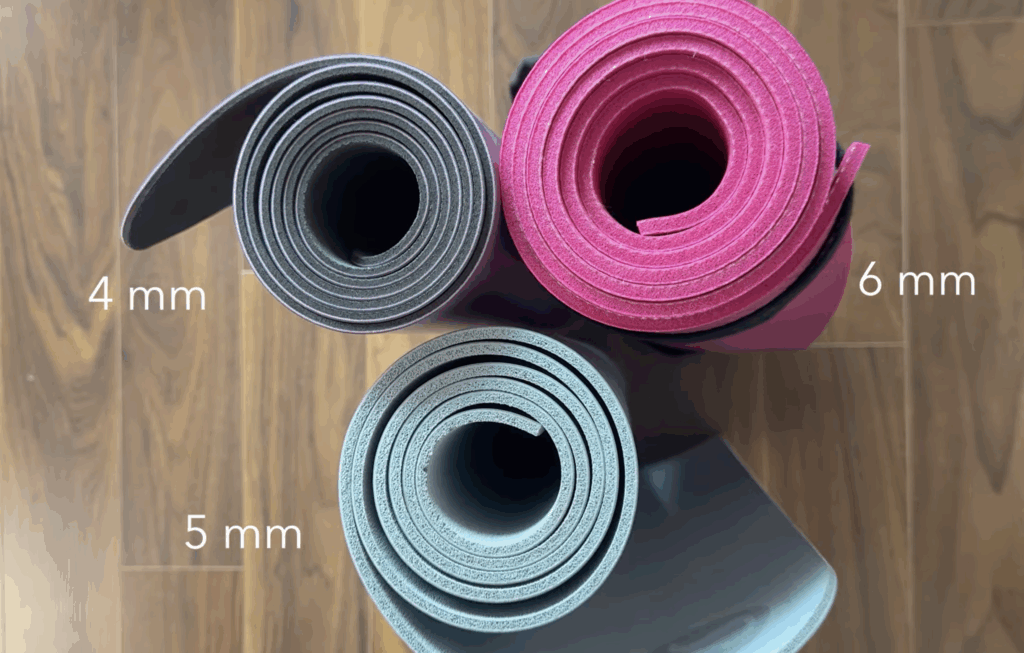
The recommended thickness is between 3 mm and 6 mm:
- 3–4 mm: lightweight, easier to carry, or ideal if you prefer more connection with the ground.
- 5 mm: provides good support for hands and knees and feels firm.
- 6 mm: offers more cushioning for the knees, though it’s a bit heavier.
If you have a knee injury, a 5–6 mm mat may work better for you. If you have no issues, 3–4 mm can be enough.
3. Density
Just as important as thickness is the density of the material; it shouldn’t sink when you press on it. If it leaves an imprint when you place your hand on it, the consistency isn’t good enough.
Many mats have the right thickness on paper, but because of poor density (like foam or some PVC mats), they end up providing much less support when you actually use them.
Mats with poor consistency also tend to slide around on the floor and roll up when you lay them out, which is very disturbing for your yoga practice.
4. Grip
Grip depends largely on the material (more on that below). It also depends on whether your hands tend to sweat a lot or stay relatively dry.
💡 Tip: a great way to test grip before buying is to borrow a mat and do a quick Downward-Facing Dog. That pose will tell you right away whether you’re sliding or not.

5. Weight
Weight depends on the material and thickness.
A heavier mat tends to be more compact, provide better support, and stay in place without rolling during practice.
If you’re carrying your mat on foot or by bike over long distances, a lighter one (3–4 mm) may serve you better.
💡 Tip: If you travel frequently or carry your mat a long way, a great solution is a travel mat or yoga towel — both fold easily, weigh almost nothing, and can be used on top of a rented mat at a studio.
6. Type of practice
If you do gentler practices with few transitions and spend most of the time sitting or lying down — like it could be in Kundalini, Yin Yoga, or Restorative classes — grip may not be your biggest concern.
On the other hand, in dynamic classes where you might sweat a lot — like Vinyasa, Power Yoga, Ashtanga, or Hot Yoga — grip and support are essential, since you’ll be moving constantly between poses. In these cases, a material that absorbs sweat quickly is also important.
💡 Tip: many people use a mat towel on top of their mat during hot practices. These absorb sweat and can be washed easily.
7. Durability and sustainability
How eco-friendly or sustainable a mat is depends not only on its material, but also on its durability and the social responsibility of how it’s manufactured — even if the materials aren’t fully natural.
This is worth considering when investing in a yoga mat. A good mat can last many years, which is far better than repeatedly buying cheap ones that end up in the trash quickly. It’s also worth checking whether the brand offers any recycling options.
Materials: the key to choosing your ideal yoga mat
Material is arguably the most important factor when choosing your yoga mat. It largely determines grip, weight, durability, and environmental impact.
Natural rubber
A natural material with excellent grip. While some mats are 100% natural rubber, most combine a rubber base with a thin layer of polyurethane (PU) on top, which further increases grip and makes them non-slip. It’s a more eco-friendly option than PVC and very popular among intermediate and advanced practitioners.
TPE (thermoplastic elastomer or synthetic rubber)
A blend of rubber and plastic. These tend to be lighter, but for that same reason they often don’t stay put on the floor and roll up on their own. Quality varies a lot between brands (some are latex-free and PVC-free), so research carefully before buying one of these.
Microfiber fabric
These have a microfiber layer (polyester and polyamide) over a rubber base. They’re especially popular for hot yoga because the more you sweat, the more grip they give you. They also tend to have nicer designs, dry quickly, and some are machine washable.
PVC (polyvinyl chloride)
The most budget-friendly material, and the most widely found in supermarkets and stores. Most cheap mats are PVC and have the issues mentioned before. However, there are exceptions: the Manduka PRO is made from PVC but is free of phthalates and harmful substances, latex-free, and manufactured in an emissions-free facility in Germany — though this is also reflected in its higher price. If you go with PVC, look for brands that guarantee responsible manufacturing practices.
Foam and PVU
Covered in the section on mats to avoid.
Eco-friendly materials: cork, jute, bamboo
There are more eco-friendly options made from cork, jute, or bamboo. I haven’t used these personally, but keep in mind that jute can feel rough on the hands and cork may offer less grip. They also tend to be more expensive and are generally not 100% the material advertised — usually blended with rubber or other materials. If you’re looking for a truly natural mat, check the composition carefully.
Yoga mat brands
Here I’ll highlight some of the most well-known brands among yoga teachers and practitioners. Two of them are the ones I personally use. If you have another brand to recommend, please share it in the comments, so we all can learn!
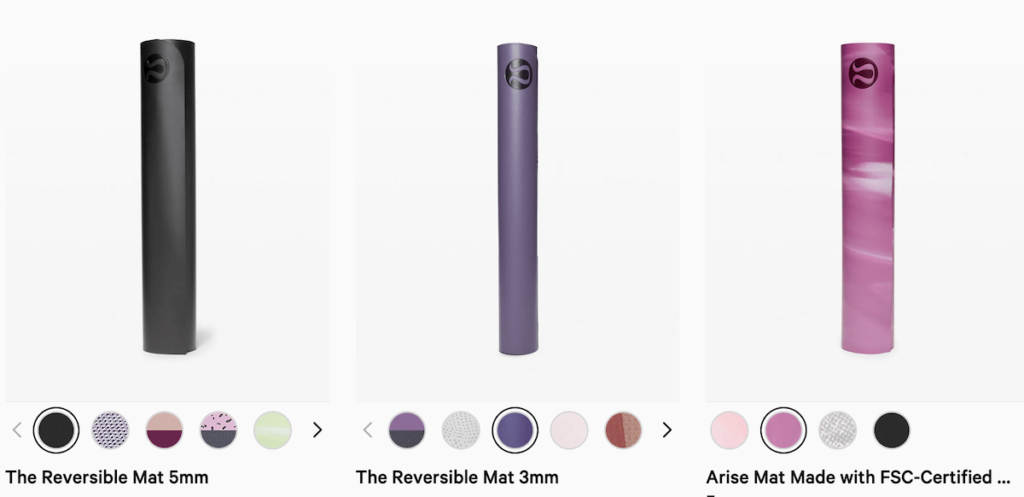
One of the mats I use personally (the 5 mm version). You can also go for the 3 mm if you want something lighter with less cushioning.
They have excellent grip and absorb moisture quickly. Its base made from natural rubber from certified, sustainable sources, and top layer from PU with a antimicrobial layer in between .
They also offer an XL mat for taller practitioners and travel mats.
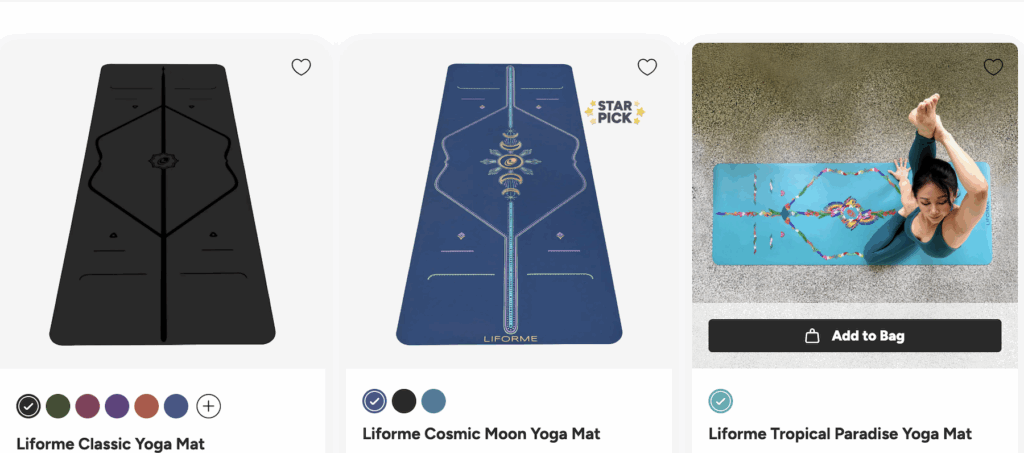
My other personal mat. It’s 4.2 mm and offers excellent grip. It features alignment lines to guide hand and foot placement in poses; keep in mind that the ideal position varies from person to person depending on body and height, but they can be very helpful for beginners. The base is also natural rubber and top layer is their own non-toxic PU which absorbs moisture, and in between a layer that keeps sweat from getting into the rubber base layer.
They also have. They offer XL, travel mats, and mats for kids.
SEE Liforme mats (use code PIAYOGA10 for 10% OFF)
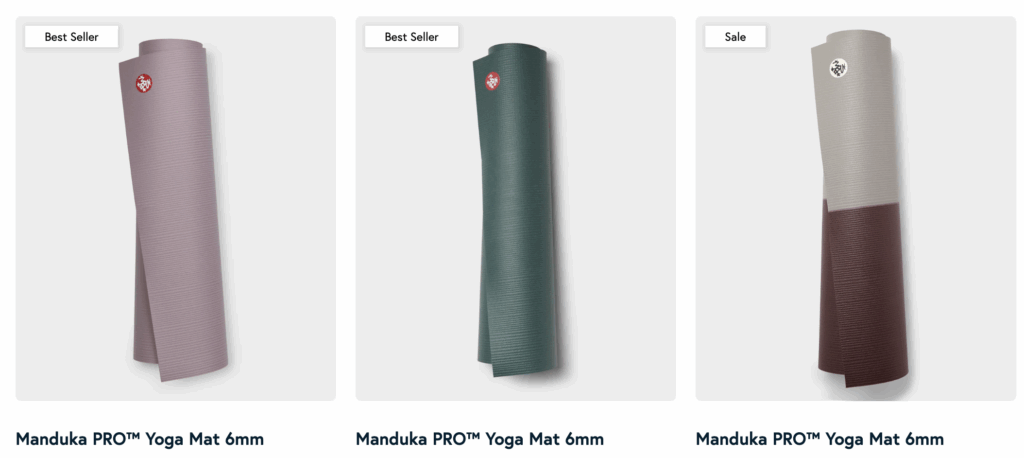
I don’t personally use this one as it tends to be slippery for me, but many of my colleagues swear by it. It’s made from PVC in an emissions-free facility in Germany and free of phthalates and harmful substances. It does not absorb moisture and that’s why it may be more slippery when sweating and thats why they recommend to use it with a yoga towel on top (which they also sell).
It does give excellent support (density) for your knees thanks to its thickness and especially its density.
Make sure to check the dimensions carefully if you go for a model other than their Pro as some versions are attractively priced but shorter or narrower.
They offer mats in different materials and textures, thinner versions, and travel mats.
SEE MANDUKA MATS Use code PIAYOGA20 for a 20% OFF
Other Brands
- The cork mat shown in the video: YOLOHA SEE HERE
- For a budget PVC option: Gaiam Yoga here
- You can also browse my Amazon Store for other options at different price points; not all tested personally, but selected based on reviews and quality.
💡 Tip: Proper cleaning is important to prevent odors, bacteria, and skin reactions. Always check each brand’s cleaning guidelines. For some mats, like lululemon, you should avoid products containing oils.
Summary: which yoga mat is right for you?
- Just starting out or on a budget: a PVC mat from a recognized brand can be a good starting point.
- Regular practice (3+ days/week): invest in a natural rubber mat at 4–5 mm. You won’t regret it.
- Hot yoga: a microfiber mat or a rubber mat with antimicrobial layer.
- Travelers: a travel mat (1.5–3 mm) or a yoga towel over a rental mat.
- Sensitive joints or knee issues: look for a 5–6 mm mat with good consistency — one that doesn’t compress under pressure.
Investing in a good mat is investing in your practice
Remember: A good yoga mat doesn’t just make your practice easier and more enjoyable — it’s a long-term investment. If you divide the cost by all the times you’ll use it, you’ll see the cost per session is minimal. And a quality mat that lasts years is infinitely better for the planet than replacing a cheap one every few months.
Have questions about which mat is right for your specific practice? Leave them in the comments. I’d love to help!